
The Platform Wars of Voice AI: From Disruption to Dominance

At today’s Nuvias TechTalk in London, the future of voice, AI, and customer experience felt less like a roadmap—and more like a battleground.
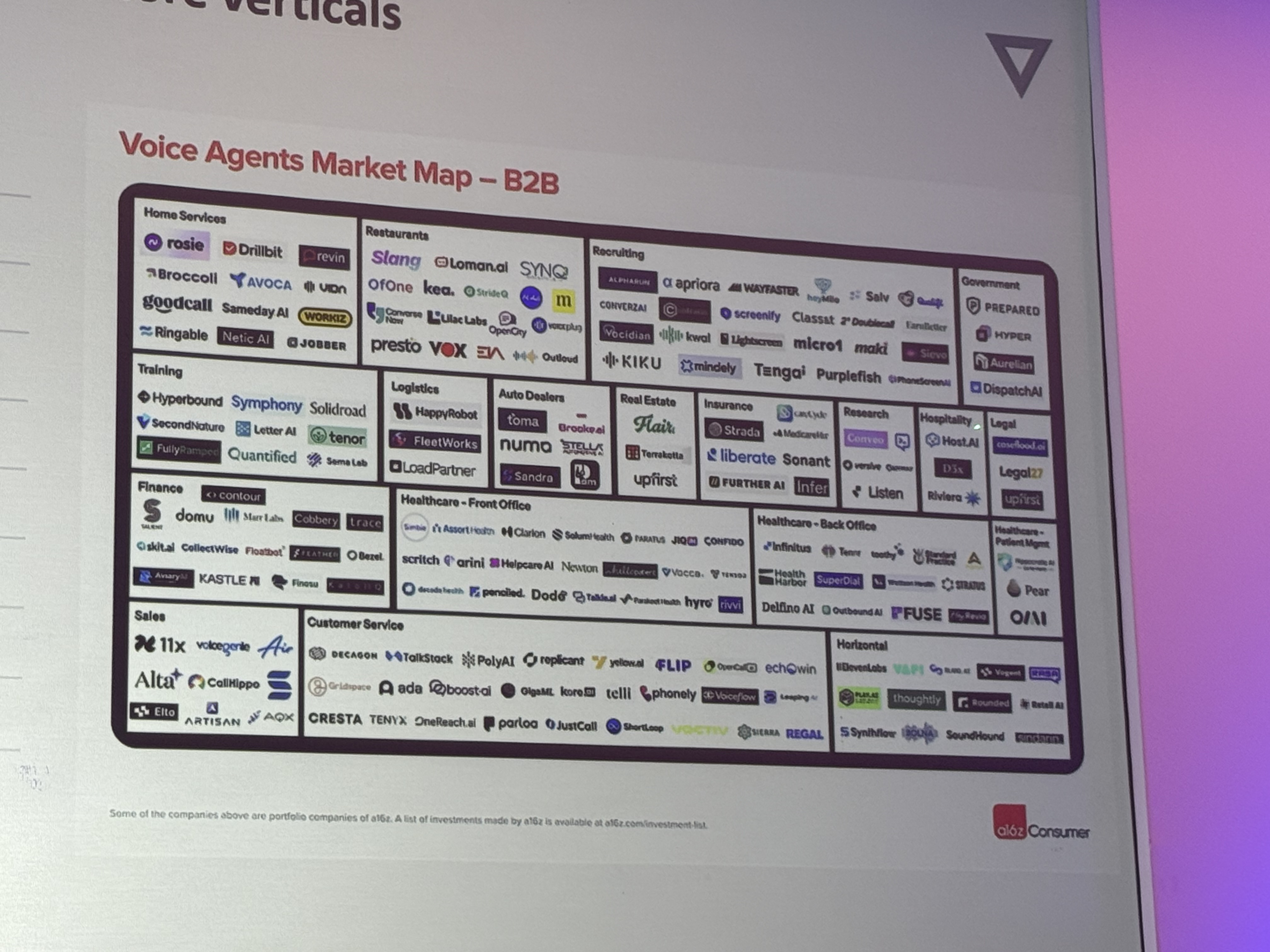
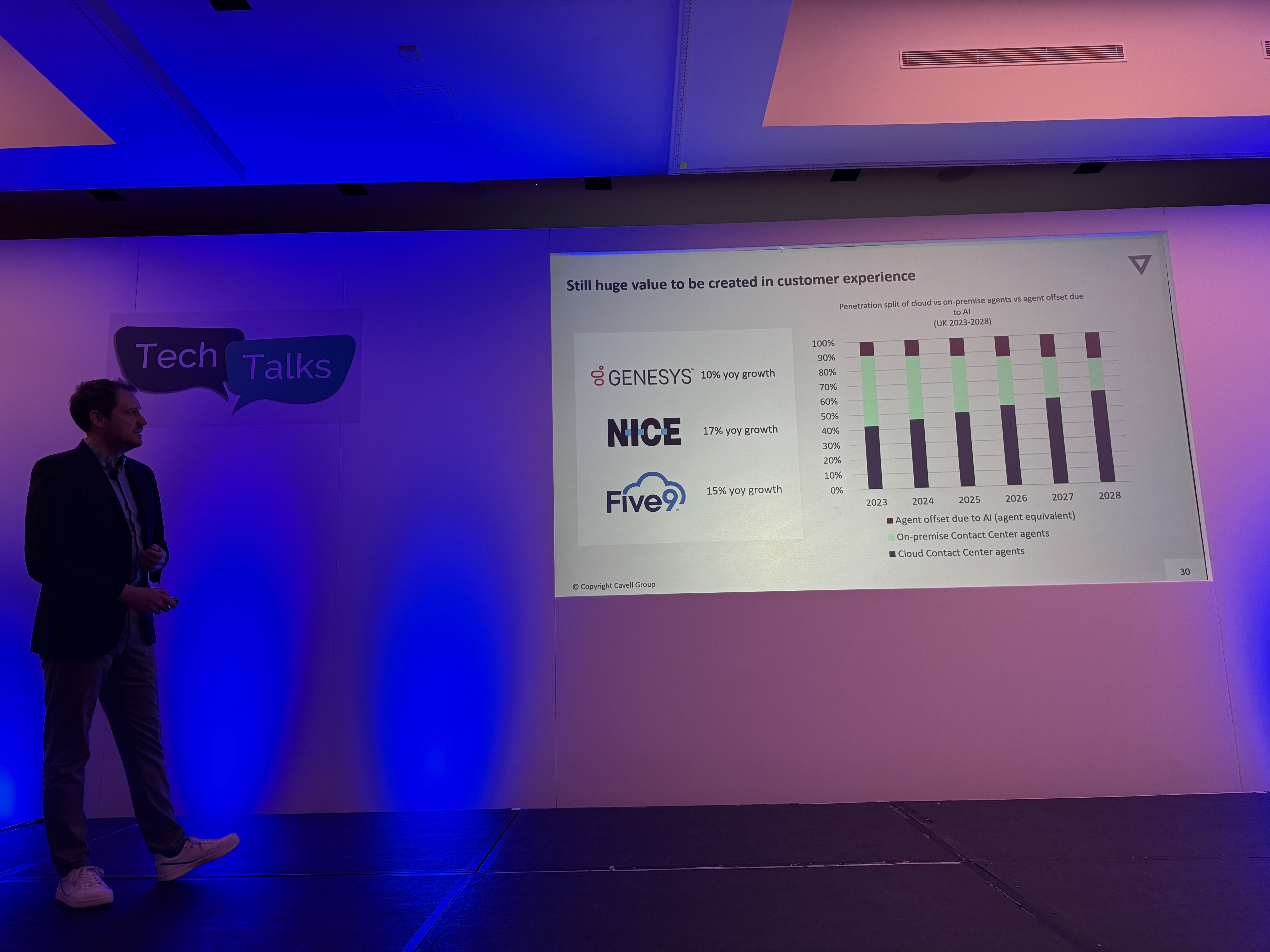
Two standout slides—shared by Dom Black of Cavell, a leading analyst in the cloud communications space—captured the shift with striking clarity. On one side, the established cloud contact center players—Genesys, NICE, Five9—growing steadily by serving larger and more demanding enterprise customers. On the other, a chaotic, colorful landscape of vertical AI voice startups attacking every imaginable niche—from restaurants to law firms, from healthcare to hospitality.
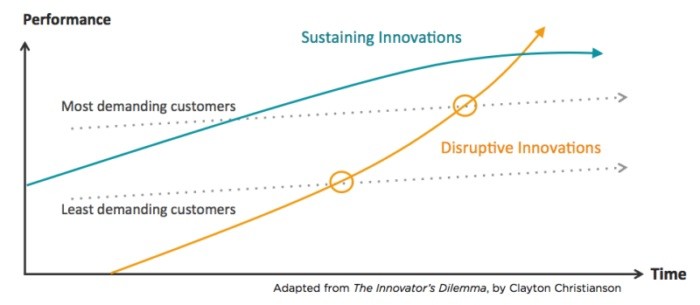
It’s a textbook case of Clayton Christensen’s “Innovator’s Dilemma”. The incumbents are locked into sustaining innovation: adding features, scaling globally, optimizing performance. But the disruptors? They’re nimble, focused, fast—and starting to look good enough for the mainstream.
We’re entering the Agentic AI era. Voice agents are no longer science fiction. They’re answering phones, solving problems, converting leads, and even negotiating invoices. And while the big vendors still dominate the Fortune 500, the battle for the mid-market is wide open.
Enter the New Power Players
If this were just about startups vs incumbents, it’d be an old story. But something bigger is happening.
CRM platforms like Salesforce and HubSpot are eyeing the same space. They already own the customer data. Now they’re embedding AI, automating workflows, and—if they get it right—absorbing parts of the UCaaS/CCaaS stack altogether. HubSpot’s CTO is already active in the Modular Composable Platforms (MCP) movement, signaling what’s coming: CRM-as-engagement-OS.
CPaaS providers like Infobip are right in the middle. They can be the routers of real-time agent experiences—handling the messy delivery work, orchestrating APIs, and giving telcos a white-label path to AI-native CX.
And then there’s a company like NVIDIA or Intel.
NVIDIA or Intel’s Opportunity: Become the Engine Room
This isn’t just about faster chips. A company like NVIDIA or Intel could become the agent infrastructure layer the whole ecosystem runs on:
- Optimizing AI inference for agent workloads
- Powering sovereign, local data centers for telcos and governments
- Enabling CRM and CPaaS partners with agentic SDKs and edge-native performance
They can bring performance, trust, and distribution—everything needed to scale voice AI without ceding control to hyperscalers.
And What About the Telcos?
This is their moment—strategically, economically, and geopolitically.
Telcos need new revenue streams. They want to support their local enterprise base. And in today’s climate, they can’t afford to rely entirely on hyperscalers or OTTs—especially when AI workloads raise fresh questions around data sovereignty, latency, and national resilience.
We’re seeing a growing push to de-globalize digital infrastructure. AI makes that even more urgent—and opens the door for edge cloud to finally fulfill its promise. Telcos already have the footprint: the sites, the reach, the regulatory trust. With the right stack—powered by a company like NVIDIA or Intel, delivered via CPaaS, and integrated with CRM ecosystems—they can offer something truly differentiated:
- Trusted, local AI agents
- Real-time CX for SMBs
- Sovereign infrastructure for regulated industries
- Edge-native voice and decision-making at the speed of conversation
They don’t need to build all the AI themselves—they need to host, orchestrate, and monetize it within their footprint.
This isn’t just digital transformation—it’s national infrastructure strategy.
Conclusion: The Curve Is Bending
The “agent economy” is accelerating. Startups are learning. CRMs are embedding. CPaaS is routing. Telcos are waking up. A company like NVIDIA or Intel could orchestrate it all.
The big contact center vendors may not even see it coming—until the curve crosses.
We’ve seen this story before. But this time, AI is the catalyst. And everyone—from startups to chipmakers to national carriers—has a role to play in reshaping how the world communicates.